01

94450 Combination Deflagration Flame Arrester & Free Vent

Combination Deflagration Flame Arrester & Free Vent

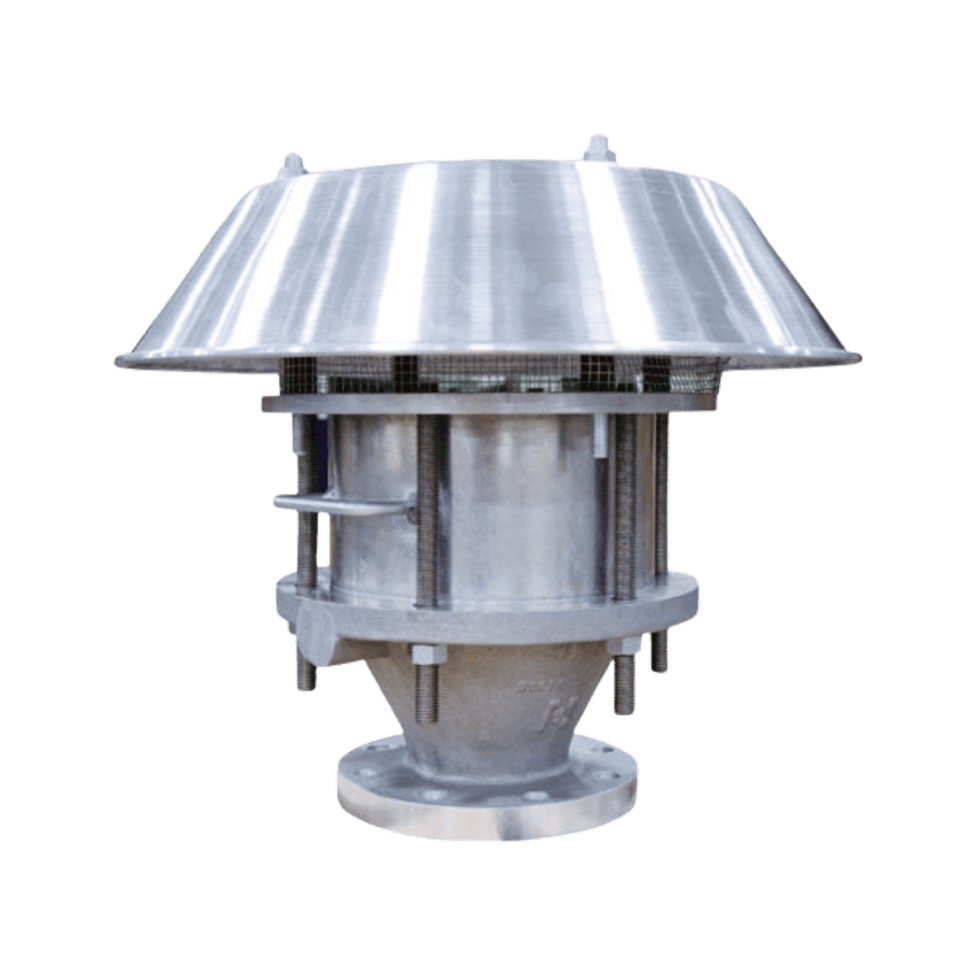
Shand & Jurs Model 94450 Combination Deflagration Flame Arrester & Free Vent

The Model 94450 Combination Deflagration Flame Arrester & Free Vent is designed for tank farm safety engineers, HSE and compliance managers, terminal operations leaders, and EPC project specifiers who need certified deflagration protection combined with atmospheric tank venting in a single compact assembly.

Installed at open vent terminations, the unit allows continuous tank breathing while preventing flame propagation into the vapor space, eliminating the need for separate free vent and arrester devices and reducing equipment count and installation labor.

A crimped ribbon flame element absorbs heat from an approaching flame front and quenches combustion before it can enter the tank, while the integrated hooded vent provides unrestricted atmospheric flow during normal breathing.

Approved to ATEX EN 12874 and ISO 16852 for IIA / NEC Group D service, the Model 94450 is available in 2–12 in. sizes with ANSI, EN 1092-1, or JIS flanges, with sizing verified using Shand & Jurs WinSize software.

Shand & Jurs Model 94450 Combination Deflagration Flame Arrester & Free Vent

Applications

  • Fuel and Chemical Storage Tanks: Installed on atmospheric fuel and chemical storage tanks to combine continuous free venting with certified deflagration protection, reducing nozzle count and overall vent-system complexity.
  • Wastewater Digesters and Biogas Systems: Protects digester covers and biogas holders where low-pressure combustible vapor must breathe to atmosphere while remaining guarded against flame propagation into the vapor space.
  • Classified Area Installations: Applied in ATEX and ISO-classified hazardous locations where a certified deflagration-protected vent is required at the tank outlet to support hazard analysis and code acceptance.
  • Atmospheric Vessels and Low-Pressure Storage: Used on atmospheric process vessels and low-pressure storage where unrestricted breathing must be preserved alongside flame protection at the open-vent discharge point.
02

Technical Specifications

Parameter

Specification

Model  

Shand & Jurs® 94450 Combination Deflagration Flame Arrester & Free Vent

Device Type  

Combination deflagration flame arrester and free vent

Technology  

Crimped ribbon flame element with integrated hooded atmospheric vent

Size Range  

2″, 3″, 4″, 6″, 8″, 10″, 12″

Max Operating Pressure  

2–6″: 1.12 bara (16.20 psia); 8–12″: 1.10 bara (15.95 psia)

Max Operating Temperature  

60 °C (140 °F)

Gas Group  

IIA (NEC Group D)

Approvals  

ATEX EN 12874 and ISO 16852 (Short Term Burn); aluminum and cast-iron bodies: ISO 16852 only

Installation  

Open vent termination on atmospheric tank or vessel nozzle

Flange Options  

ANSI 125/150 FF/RF, EN 1092-1 PN10/16 FF/RF, JIS 10K FF/RF (RF not available with aluminum)

Body Materials  

Carbon Steel, 304 SS, 316 SS, Aluminum, Duplex SS, Hastelloy C, or Alloy 20

Tube Bank Materials  

Carbon Steel, 304 SS, 316 SS, Duplex SS, Hastelloy C, or Alloy 20

Hardware  

18-8 SS standard; 304 SS, 316 SS, Duplex SS, Hastelloy C, or Alloy 20 available

Temperature Monitoring  

3/4 in. NPT port on unprotected side of tube bank (probe user-supplied)

Element Design  

Unitized removable element for inspection without body removal

Sizing Support  

Shand & Jurs WinSize pressure-drop software

Typical Applications  

Fuel storage tanks, wastewater digesters, biogas systems, chemical storage, atmospheric vessels, classified area installations

Support
2026 COST ESTIMATE

Support

If you have questions not covered here, please contact the Cognesense support team for assistance.

Contact Us

When should I specify the Model 94450 instead of a separate vent and arrester?

The Model 94450 is applied where an atmospheric vent and a certified deflagration arrester are both required at the tank outlet. Combining the two devices reduces equipment count, structural supports, and installation labor. For conservation (pressure-vacuum) venting, use the Shand & Jurs 9402X Series. For a standard flame arrester with a separate free vent, use the Model 94550.

How does the Model 94450 stop a deflagration while still allowing tank breathing?

+

The crimped ribbon flame element quenches an approaching flame front by absorbing heat and dropping gas temperature below the ignition point. During normal operation the integrated hooded vent provides unrestricted atmospheric flow, so the tank continues to breathe through the same assembly that provides deflagration protection.

Which certifications and gas groups does the Model 94450 cover?

+

The unit is approved to ATEX EN 12874 and ISO 16852 (Short Term Burn) for IIA / NEC Group D service. Aluminum and cast-iron body variants are approved to ISO 16852 only; carbon steel, 304/316 SS, Duplex, Hastelloy C, and Alloy 20 bodies support both ATEX and ISO 16852 approvals.

What material options are available for corrosive service?

+

Body and tube bank material choices range from standard carbon steel through 304/316 stainless steel up to Duplex stainless, Hastelloy C, and Alloy 20 for highly corrosive or coastal environments. Raised-face flanges are not available on aluminum bodies; flat-face aluminum is offered for lightweight installations.

How is element condition monitored and how is the element serviced?

+

A 3/4 in. NPT port on the unprotected side of the tube bank accepts a user-supplied temperature probe for condition-based monitoring. The unitized removable element can be withdrawn for inspection and replacement without removing the body from the tank nozzle, reducing downtime and confined-space entry needs.

Bottom section image
Measure.
Monitor.
Protect.