96311
9633X
01

Internal Safety Valves

Automatic shut-off protection inside the tank or in-line.

What It Is & How It Works

Internal safety valves are shut-off devices installed inside the tank shell or in-line on fill, discharge, or product nozzles. They provide automatic or emergency closure of the pipeline connection at the tank wall, stopping product flow during fire or piping-failure events. Every tank connected to external piping needs a way to isolate its contents when that piping is compromised.

The valve body mounts inside the tank with its seat at the nozzle flange, and a closure element seals against the seat to stop flow. Fusible-link models hold the valve open with a heat-sensitive element that melts under fire exposure, letting a spring or counterweight drive the closure shut and isolate tank contents from exposed piping.

Internal safety valves install through standard tank shell nozzles with no external piping modifications. Sizing depends on nozzle diameter, maximum flow rate, and the product’s specific gravity. Because the valve sits entirely inside the tank, it stays protected from external mechanical damage, weather, and fire exposure.

Manual vs. Hydraulically Actuated Internal Safety Valves

The manually actuated valve is held open by a chain and fusible link that releases and closes automatically when fire exposure reaches 212°F, with no remote capability. The hydraulically actuated valve fails closed on loss of pressure and integrates with emergency shutdown (ESD) systems for remote operation on pressurized services such as LPG and anhydrous ammonia. Both close automatically, but the manual valve relies solely on heat while the hydraulic valve can also be tripped remotely from a safe location.

When to Specify Internal Safety Valves

Internal safety valves are specified when a tank requires automatic or emergency shut-off at the tank-wall connection under fire or piping-failure conditions:

  • LPG Sphere and Bullet Tank Storage: Installed at all liquid and vapor outlet connections under NFPA 58 and API 2510 for automatic shutoff during external piping failure, vehicle drive-away while loading, or fire exposure.
  • Anhydrous Ammonia Storage and Transfer: Required under OSHA PSM and ANSI K61.1 at all liquid withdrawal connections to immediately stop any toxic release caused by piping failure or impact damage.
  • Flammable and Combustible Liquid Storage Tanks: Specified on aboveground tanks handling gasoline, diesel, and fuel oil under NFPA 30 so product flow can be stopped at the tank if downstream piping fails.
  • Transportation Loading and Unloading Terminals: Required under DOT 49 CFR Part 178 and NFPA 58 at transfer connections on pressurized transport vessels to prevent catastrophic release during a vehicle drive-away while connected.
  • Cryogenic and Refrigerated Storage Vessels: Specified on liquid oxygen, nitrogen, ethylene, and LNG tanks under NFPA 59A and CGA standards for reliable isolation across a wide temperature range, independent of external piping integrity.
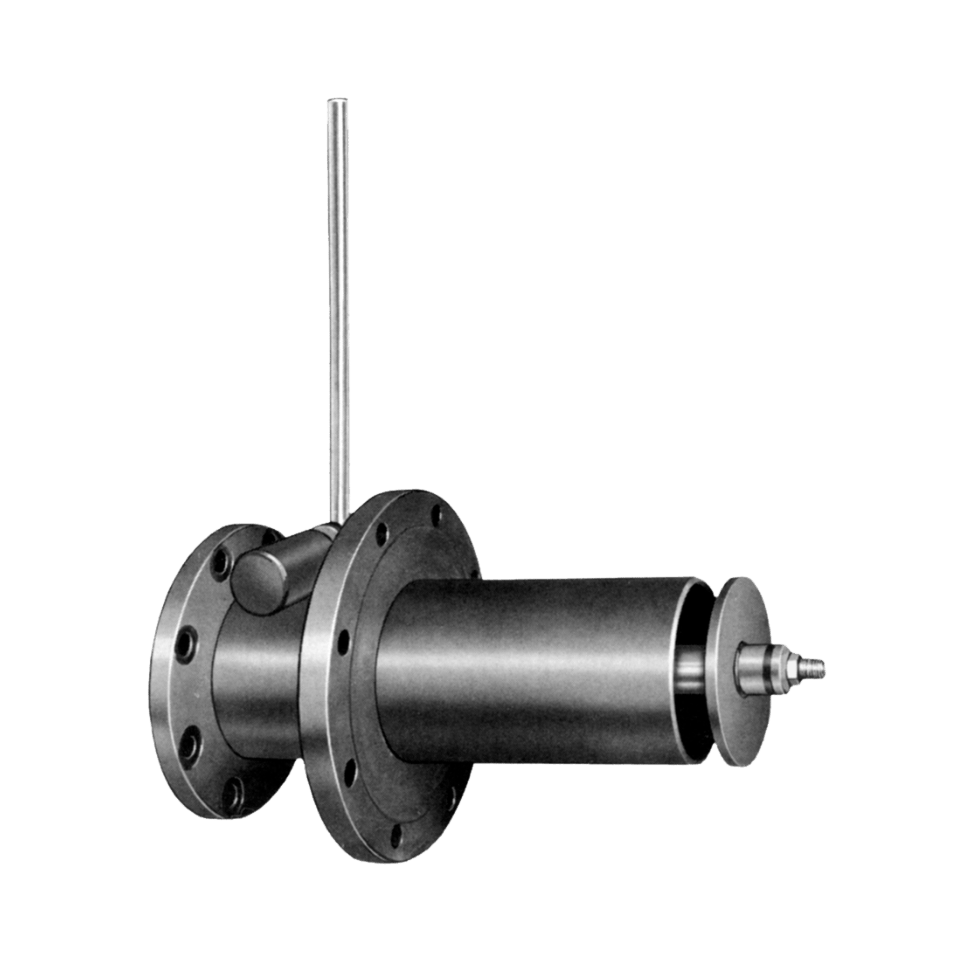
96311 Internal Safety Valve
02

Why It Excels

01

Tanks Requiring Passive Fire Protection Without Remote Control

Manually actuated fusible-link models close automatically when nozzle temperature reaches the link's rated melting point, isolating the tank before fire compromises piping integrity, with no power, control system, or operator action.

02

Facilities Requiring Remote Emergency Shutoff and ESD Integration

Hydraulically actuated models fail closed on loss of operating pressure and tie directly into facility emergency shutdown systems, letting operators isolate the tank remotely from a safe location.

03

Installations with Limited Space for External Emergency Valves

Because the entire valve body sits inside the tank, both manual and hydraulic models need no external piping space, actuators, or mounting brackets on the tank shell.

04

Multi-Product Terminals with Varied Nozzle Configurations

Both models come in sizes from 2 to 14 inches and in carbon steel, stainless steel, and aluminum to match each tank's nozzle diameter, stored product, and operating temperature.

03

Manual vs. Hydraulically Actuated Internal Safety Valves — Selection Guide

Attribute Manual (Fusible Link) Hydraulically Actuated (Fusible-Link)    
Primary Function
Fire-case isolation by automatic closure when heat melts the fusible link Remote and emergency shutoff with automatic fail-closed closure on loss of hydraulic pressure  
Actuation Method
Heat-sensitive fusible link releases the spring-loaded closure element Hydraulic pressure holds the valve open against spring force; loss of pressure lets the spring close it    
Trigger Condition
Nozzle temperature reaches the fusible link's rated melting point, typically 212°F Loss of hydraulic pressure from control-line failure, ESD activation, or operator command    
Remote Operation
None; the valve responds only to heat at its location Fully operable from a control panel or ESD station at any safe distance    
Reset Method
Manual; replace the fusible link and reset the valve before returning to service Restore hydraulic pressure; the valve reopens remotely without physical access    
Regulatory Driver
NFPA 30, NFPA 58 fire-case piping isolation NFPA 58, API 2510, OSHA PSM remote shutoff and ESD    
Recommendation
  • Specify where passive fire protection is the priority and remote operation or ESD integration is not required
  • Specify on pressurized vessels where remote emergency closure, ESD integration, or regulatory remote-shutoff compliance is required
   

What to Consider Alongside Internal Safety Valves

Consider an alternative when:

  • You need electronic high-level detection with audible and visual alarms and control-system integration rather than a mechanical shut-off. See Level Alarms.
  • You need to control tank breathing during normal thermal and pumping cycles rather than isolate a pipeline connection. See Pressure & Vacuum Conservation Vents.
  • You need large-volume fire-case overpressure relief at the tank roof rather than pipeline isolation at a nozzle.

How Internal Safety Valves Fit Into a Larger System

04

Featured Products

01

Shand & Jurs 96311 Manual Internal Safety Valve

Chain-and-fusible-link valve that spring-closes automatically at 212°F, giving passive fire-case isolation at nozzles storing or transferring flammable liquids.

02

Shand & Jurs 96330 Hydraulically Actuated Internal Safety Valve

Fails closed on loss of hydraulic pressure for remote emergency isolation and bidirectional shutoff on LP-Gas, ammonia, and similar pressurized service.

03

Shand & Jurs 96330I Hydraulic Internal Safety Valve with Position Indicator

Adds an integral position indicator to the 96330 for continuous visual confirmation of true valve position for operations and compliance.

05

Specifying tank-wall isolation for a pressurized or flammable service?

Talk to an engineer
Shand & Jurs
Measure.
Monitor.
Protect.