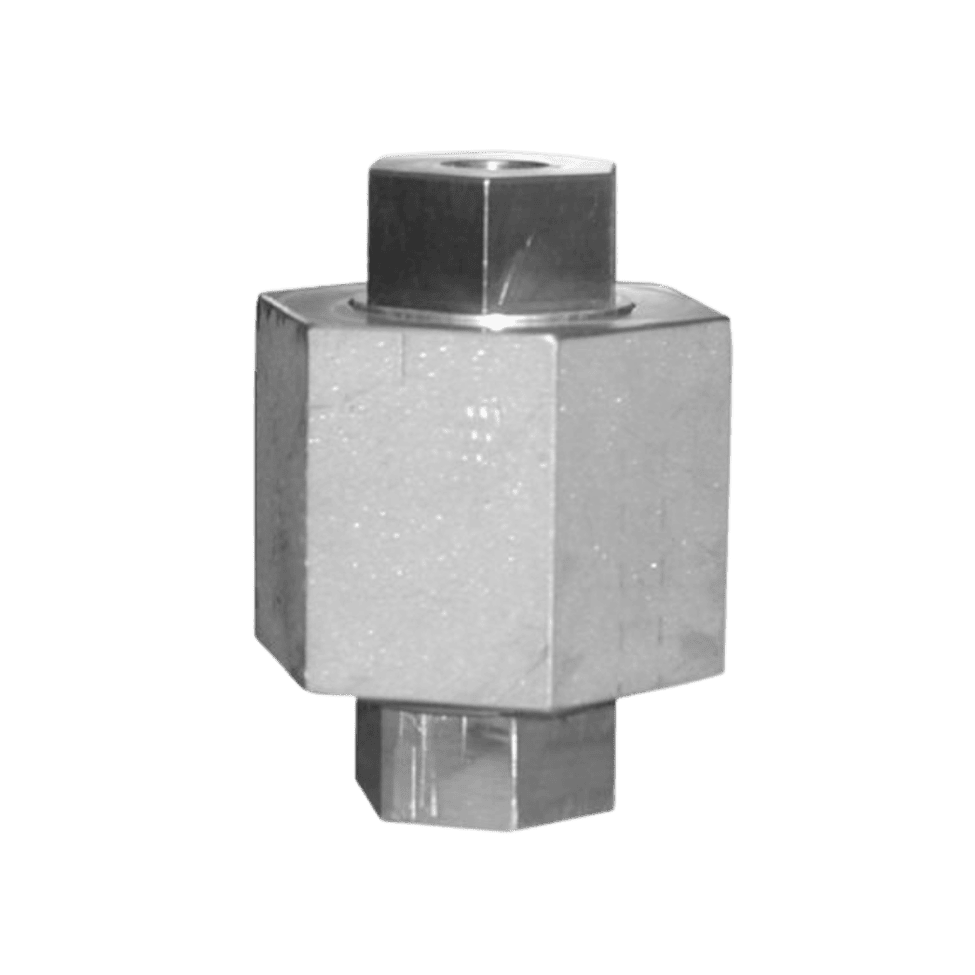
Local Flashback Protection Arrester
For biogas engineers, regulator specialists, and fuel-gas designers, the Shand & Jurs Biogas 97200 Flame Check provides flashback protection directly at regulators, instruments, pilot lines, and small-diameter gas connections where full-size inline flame arresters cannot be practically installed.
Unlike header flame arresters intended for main piping protection, the 97200 installs at the equipment connection, so the flame path is stopped within inches of the ignition source and thermal damage to diaphragms, gauges, transmitters, and vent piping is prevented.
Gas flows through a stainless woven quenching element that absorbs flame energy and cools it below the ignition temperature, while the low-restriction geometry preserves sensing accuracy and normal control-gas flow to the protected device.
Rated for 25 PSIG service across 1/4″ to 2″ NPT threaded sizes in aluminum or stainless construction, the 97200 delivers close-coupled flashback protection for low-pressure gas connections in biogas, landfill, and utility fuel service.
Installs directly at the equipment connection rather than on the piping run, stopping flame within inches of the ignition source before damage.
Woven stainless media absorbs flame energy and cools flashback below ignition temperature, protecting regulators, instruments, and pilot lines from thermal damage.
Minimal pressure drop preserves sensing accuracy and normal gas flow, so protection is added without disturbing regulator control or instrument response.
Union connection allows removal, inspection, and cleaning of the element without disconnecting adjacent regulators, gauges, or pilot equipment during maintenance.
Aluminum or stainless body and gasketed seat handle wet and mildly corrosive biogas service, supporting long element life in digester and landfill gas duty.
Threaded connections from 1/4″ to 2″ NPT protect instrument taps, gauge piping, pilot lines, and regulator vents where full-size arresters cannot fit.
Local flashback protection
25 PSIG
1/4 in. – 2 in. NPT
Inline at equipment connection
Aluminum or Stainless Steel
Stainless Steel woven media
Nitrile fiber
Stainless Steel
If you have questions not covered here, please contact the Cognesense support team for assistance.
Contact Us ↵An inline flame arrester protects main piping runs; a flame check protects the equipment connection itself. The 97200 installs directly at regulators, instruments, and pilot lines where a full-size arrester cannot physically fit, stopping flashback close to the ignition source.
Gas flows through a stainless woven element that absorbs flame energy and cools it below ignition temperature before it can travel upstream. The woven media provides a large surface area for rapid heat transfer while holding the flow path open during normal operation.
No. The low-restriction flow path minimizes pressure drop, so regulator response and instrument sensing accuracy are preserved. The element provides protection without introducing the flow restriction that would destabilize control or drift measurement.
The device is rated for 25 PSIG service across 1/4″ through 2″ NPT threaded sizes, matching the connection range typical of regulators, instruments, and pilot supply lines on low-pressure biogas and utility fuel gas systems.
Yes. The union service body allows the element to be removed and cleaned without disconnecting adjacent regulators or instruments. This encourages periodic cleaning after fouling rather than replacement or removal of the protection.
No. The 97200 provides local equipment-level protection; it does not replace deflagration or detonation arresters required on main piping. Use inline flame arrester assemblies for header protection and the 97200 at instrument and regulator connections.
With over a century of tank-safety heritage inside Cognesense, the Shand & Jurs Biogas 97200 Flame Check is chosen when flashback protection must reach the equipment connection itself. Its close-coupled installation, woven stainless element, and serviceable union body stop flame within inches of the ignition source while preserving sensing accuracy and normal flow. Installed at regulators, instruments, and pilot gas lines, it is trusted wherever you need to measure, monitor, and protect what matters most.