01

94307 Horizontal End-of-Line Flame Arrester

Horizontal End-of-Line Flame Arrester

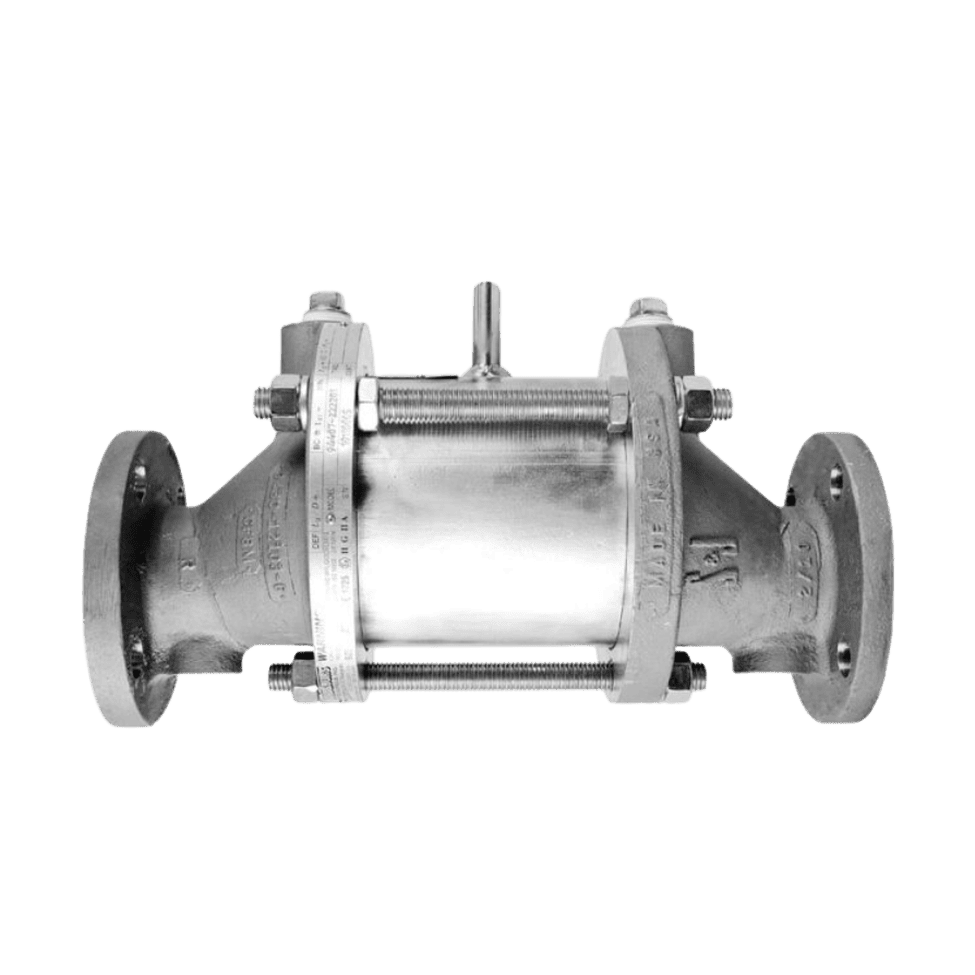
Shand & Jurs Model 94307 Horizontal End-of-Line Flame Arrester

The Model 94307 Horizontal End-of-Line Flame Arrester is designed for tank farm safety engineers, HSE and compliance managers, terminal operations leaders, and EPC project specifiers who need certified ignition protection at the atmospheric discharge of low-pressure tanks and vapor piping systems.

The Model 94307 establishes the flame-arresting boundary at the outlet of the vent piping rather than within the connected system, stopping external ignition at the point of exposure while maintaining unrestricted vapor flow during normal breathing cycles.

A spiral crimped ribbon element absorbs heat from the flame front and quenches combustion before it can reach protected equipment. The horizontal body orientation reduces condensate accumulation that could obstruct the flame path and compromise arresting performance in wet vapor service.

With FM-style NEC Group D suitability, multiple material options, a removable tube bank for inspection, and a drainable configuration, the Model 94307 supports defensible hazard analysis, predictable maintenance, and reliable long-term protection in condensable vapor environments.

Shand & Jurs Model 94307 Horizontal End-of-Line Flame Arrester
02

Key Features

Spiral Crimped Ribbon Element

Quenches flame fronts by absorbing heat at the flame gap while maintaining normal vapor discharge capacity through the element.

Horizontal Body Orientation

Reduces condensate accumulation that could obstruct the flame path, preserving certified arresting performance in wet vapor service.

Drainable Configuration

Allows controlled removal of collected condensate during inspection intervals, preventing liquid buildup from affecting flame gap geometry.

Removable Tube Bank Assembly

Enables inspection and servicing of the element without removing the arrester body from connected piping or vent alignment.

NPT Sensor Port

Provides a monitoring access point for assessing element condition so inspection and cleaning intervals can be based on measured performance.

Multi-Material Construction

Cast aluminum, cast steel, or 316 stainless steel body and element options maintain flame gap integrity in corrosive or condensable vapor service.

Dual-Standard Flange Compatibility

Available with ANSI Class 150 RF/FF or EN PN16 RF/FF drilling for direct integration with North American and European piping standards.

NEC Group D Protection

Suitability for NEC Group D gas environments supports code acceptance and the defensibility of hazard analysis in permitted installations.

Applications

  • Atmospheric Vent Outlets: Installed at tank vent stacks and free vent terminations on atmospheric and low-pressure tanks to stop external flame propagation into the vapor space.
  • Digester Gas and Biogas Vents: Protects digester gas vents and biogas collection headers where wet, low-pressure combustible vapor must discharge without exposure to ambient ignition.
  • Vapor Recovery Vents: Provides ignition control at vapor recovery system vents and flare knockouts where condensable hydrocarbon vapor is routinely released to atmosphere.
  • Low-Pressure Vapor Piping: Safeguards low-pressure piping networks and open-vent headers where unrestricted breathing flow must be preserved during normal operation.
03

Technical Specifications

Parameter

Specification

Model  

Shand & Jurs® 94307 Horizontal End-of-Line Flame Arrester

Technology  

Spiral crimped ribbon flame arresting element

Size Range  

2″, 3″, 4″, 6″, 8″, 10″, 12″

Temperature Range  

Max Operating Temperature 140 °F (60 °C)

Maximum Operating Pressure

1.0 psig

Maximum Static Pressure  

10 psig

Gas Group  

NEC Group D

Installation Location  

Within 10 pipe diameters of the ignition source

Flange Options  

ANSI 150 RF/FF or EN PN16 RF/FF

Body Material  

Cast Aluminum, Cast Steel, or 316 Stainless Steel

Element Material  

Aluminum or 316 Stainless Steel

Hardware  

316 Stainless Steel

Gaskets  

Synthetic Composition

Configuration  

Horizontal orientation with drainable condensate path

Discharge Behavior

Unrestricted vapor flow at normal breathing pressures

Sizing Support

Shand & Jurs WinSize pressure-drop software

Support
2026 COST ESTIMATE

Support

If you have questions not covered here, please contact the Cognesense support team for assistance.

Contact Us

Why choose the horizontal Model 94307 over a vertical end-of-line arrester?

The horizontal body orientation reduces condensate buildup that could obstruct the flame path in wet vapor service. For installations where upward discharge is required or condensate handling is not a concern, the Shand & Jurs Model 94306 Vertical End-of-Line Flame Arrester is the companion option.

Why is the Model 94307 installed at the vent outlet instead of inline?

+

Placing the flame-arresting boundary at the atmospheric discharge stops ignition at the point of exposure. This protects connected tanks and piping without the higher backpressure of inline detonation arresters and avoids unintended pressure accumulation during normal breathing cycles.

How does the drainable configuration support reliable performance?

+

Collected condensate can be removed during inspection intervals through the drain configuration, preventing liquid accumulation from affecting flame gap geometry. The NPT sensor port and removable tube bank allow condition monitoring and element inspection without disturbing connected piping.

Which materials should I specify for corrosive or condensable vapor service?

+

316 stainless steel body and element construction is recommended for wet, sour, or chemically aggressive vapors. Cast steel bodies add mechanical durability for industrial installations, and alternative element materials are available for severe environments where aluminum would degrade over time.

How do I size the Model 94307 for a given vent system?

+

Flow capacity and pressure drop can be verified using the Shand & Jurs WinSize sizing software. The arrester must be installed within ten pipe diameters of the ignition source to maintain certified flame-arresting performance.

Shand & Jurs
Measure.
Monitor.
Protect.