01

97300 Waste Gas Burner

Stack-Mounted Ignition Biogas Burner

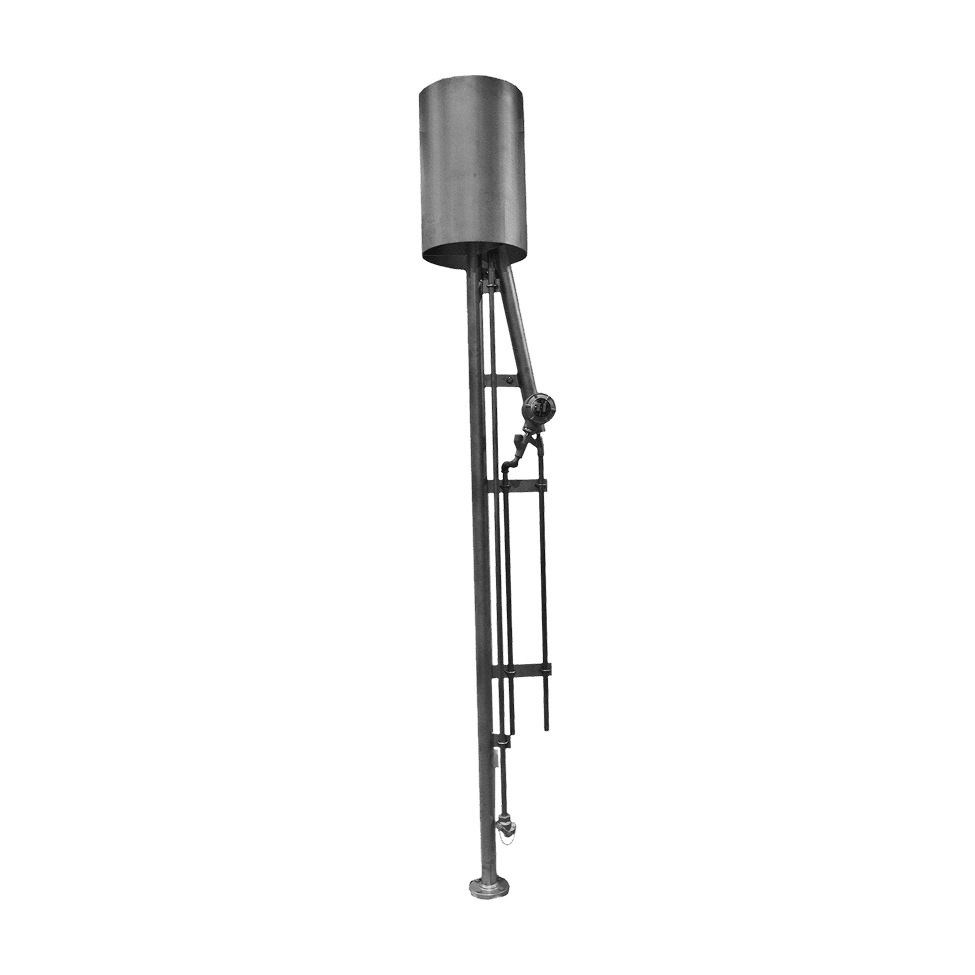
Shand & Jurs 97300 Waste Gas Burner

For digester-gas system designers, wastewater plant operators, and landfill gas managers, the Shand & Jurs 97300 Waste Gas Burner combusts excess biogas when production temporarily exceeds engine or recovery capacity, preventing uncontrolled methane release and digester overpressure.

Unlike atmospheric venting or passive dispersion, the 97300 uses a stoichiometric pilot and cyclonic swirl-induced flare tip to sustain stable combustion of wet, variable-BTU methane at elevation, with the ignition source positioned above grade rather than below the flame front.

A stack-mounted pilot keeps the flame clear of ground equipment while the wind-shrouded tip maintains combustion at wind speeds up to 150 mph. The 97300T variant adds a touchscreen panel and PLC integration for automated flare monitoring while holding identical combustion performance.

The 97300 suits anaerobic digesters, sludge digesters, landfill gas headers, biogas storage, engine bypass disposal, and emergency gas release — aligned with NFPA 820 biogas-handling expectations and fitting within EPA 40 CFR Part 60 Subpart WWW / Cf monitoring programs.

Shand & Jurs 97300 Waste Gas Burner
02

Features

Stoichiometric Pilot Assembly

Maintains reliable ignition and proper air-to-fuel ratio across wide pressure, moisture, and BTU fluctuations typical of saturated wet biogas.

Cyclonic Swirl Flare Tip

Swirl inducers generate intense air-fuel mixing at the tip, supporting efficient combustion and stable flame retention across variable gas quality.

Wind-Shrouded Stack

Induces combustion air and shields the flame front, maintaining stable combustion in wind speeds up to 150 mph with optional beveled tip.

Stack-Mounted Ignition

Positions the flame safely above process equipment for clearance and dispersion, keeping combustion products away from ground-level personnel.

Flexible Pilot Operation

Supports continuous, intermittent, or 24/7 standing pilot modes, letting operators balance ignition readiness against pilot fuel consumption.

Touchscreen Control (97300T)

Optional local touchscreen and PLC integration provides flame-proven and alarm outputs for automated flare monitoring and SCADA system tie-in.

Applications

  • Anaerobic Digesters: Prevents digester overpressure during production surges, combusting excess methane before uncontrolled release through relief hatches or emergency vents.
  • Sludge Digesters: Handles saturated wet biogas streams from municipal sludge digestion where combustion stability across variable BTU is essential to safe operation.
  • Landfill Gas Systems: Destroys collected landfill gas when engine or recovery demand drops, supporting gas-collection programs and reducing fugitive methane release.
  • Biogas Storage: Protects gas holders and storage vessels by relieving pressure through controlled combustion rather than venting unburned methane to atmosphere.
  • Engine Bypass Disposal: Combusts surplus gas when generator engines are offline for maintenance, keeping the digester producing while maintaining process pressure stability.
  • Emergency Gas Release: Provides controlled destruction of methane during upset conditions, replacing uncontrolled venting that may equal thousands of pounds annually.
03

Specifications

Parameter

Specification

Device Type

Stack-mounted ignition biogas waste gas burner (candlestick flare)

Sizes

2″, 3″, 4″, 6″, 8″, 10″, 12″

Capacity Range

4,000 – 218,600 ft³/hr

Turndown

10:1 (typical)

Stack Burner Connection

ANSI 150 lb. Raised Face Flange

Wind Rating

Up to 150 mph

Biogas Composition

50–70% CH₄ with CO₂ balance and trace gases

Moisture Content

Saturated (100% humidity)

Pilot Gas

Natural gas, LPG (propane), or waste gas (≥500 BTU/ft³)

Pilot Gas Pressure

12 in. W.C. – 10 PSIG

Pilot Operation

Continuous while burning, intermittent, or 24/7 standing pilot

Power Requirements

120 VAC, 4 A standard or 240 VAC, 2 A optional

Controller Temperature Range

−20°F to 150°F

Contact Outputs

Alarm SPST (120 VAC, 1 A); Flame Proven SPST (120 VAC, 1 A)

Control Modes

Manual start, Remote start, Pressure Transmitter, or Pressure-switch start

Thermocouple

Inconel with Type K wiring

Control Box

NEMA 4, NEMA 4X Stainless Steel, or NEMA 7 Aluminum — UL508A available

Stack and Shroud Material

304L Stainless Steel (316L optional)

Piping and Pilot Components

304L Stainless Steel (316L optional)

Hardware

Stainless Steel

Variant

97300T adds touchscreen panel and PLC integration; identical combustion performance

Options

Continuous or intermittent pilot; remote/SCADA or pressure-based start; touchscreen (97300T); NEMA 7 hazardous-area enclosure; dual-fuel pilot; 316 SS construction; beveled shroud for higher wind

Contact Support
2026 COST ESTIMATE

Contact Support

If you have questions not covered here, please contact the Cognesense support team for assistance.

Contact Us

What is the difference between the 97300 and the 97301?

Both are atmospheric candlestick biogas burners with identical combustion performance. The 97300 uses stack-mounted ignition, which positions the pilot up at the flame tip. The 97301 uses a ground-level venturi pilot so that ignition hardware can be inspected and serviced from grade. Choose stack-mounted for simpler pilot routing; choose ground-level for safer maintenance access without elevated work.

What destruction efficiency does an open candlestick burner provide?

+

The 97300 is an open atmospheric flare rather than an enclosed combustor, so destruction efficiency is not site-rated on the datasheet. If a rated destruction efficiency is required for permit compliance (for example under EPA 40 CFR Part 60 Subpart WWW/Cf monitoring programs or similar state rules), specify the 97311 Enclosed Waste Gas Burner, which is rated at minimum 99% methane destruction with measured NOx and CO limits.

How wet can the biogas be?

+

The 97300 is designed for saturated biogas at 100% humidity with 50–70% CH₄ content. The stoichiometric pilot sustains ignition across that moisture and BTU range without requiring upstream gas conditioning or drying, which keeps installed cost down on typical digester and landfill applications.

Can the burner operate unattended?

+

Yes. Control modes include manual, remote, pressure transmitter, and pressure-switch start, so the burner can be activated automatically when upstream pressure crosses a setpoint. Alarm and flame-proven contact outputs feedback to plant SCADA. The 97300T variant adds a local touchscreen and PLC tie-in for fuller unattended automation.

What wind conditions can the burner handle?

+

The wind shroud supports stable combustion in wind speeds up to 150 mph. For sites with higher sustained wind exposure, a beveled shroud is available as an option to further protect the flame front.

How is the 97300 powered and controlled?

+

Standard electrical supply is 120 VAC at 4 A; 240 VAC at 2 A is optional. The controller operates across −20°F to 150°F ambient. Control enclosures are available as NEMA 4, NEMA 4X stainless, or NEMA 7 aluminum for hazardous-area installations, with UL508A panels available on request.

Where does the 97300 fit regulatory-wise?

+

The 97300 supports biogas-handling architecture aligned with NFPA 820 expectations for wastewater and digester facilities and fits within monitoring and destruction programs that reference EPA 40 CFR Part 60 Subpart WWW/Cf and 40 CFR Part 63 MACT. Final compliance is determined at the site by the owner-operator and the permitting authority; specify the enclosed 97311 where rated destruction efficiency is required.

Summary

With over a century of tank-safety heritage inside Cognesense, the Shand & Jurs 97300 Waste Gas Burner is chosen when excess biogas must be safely destroyed rather than released. Its stoichiometric pilot, cyclonic swirl flare tip, and wind-shrouded stack sustain stable combustion of wet, variable-BTU methane at anaerobic digesters, landfill gas systems, and biogas storage sites. For wastewater and biogas facilities, it is trusted wherever you need to measure, monitor, and protect what matters most.

Bottom section image
Measure.
Monitor.
Protect.