01

97130 Thermal Valve

Fire-Activated Gas Shutoff Valve

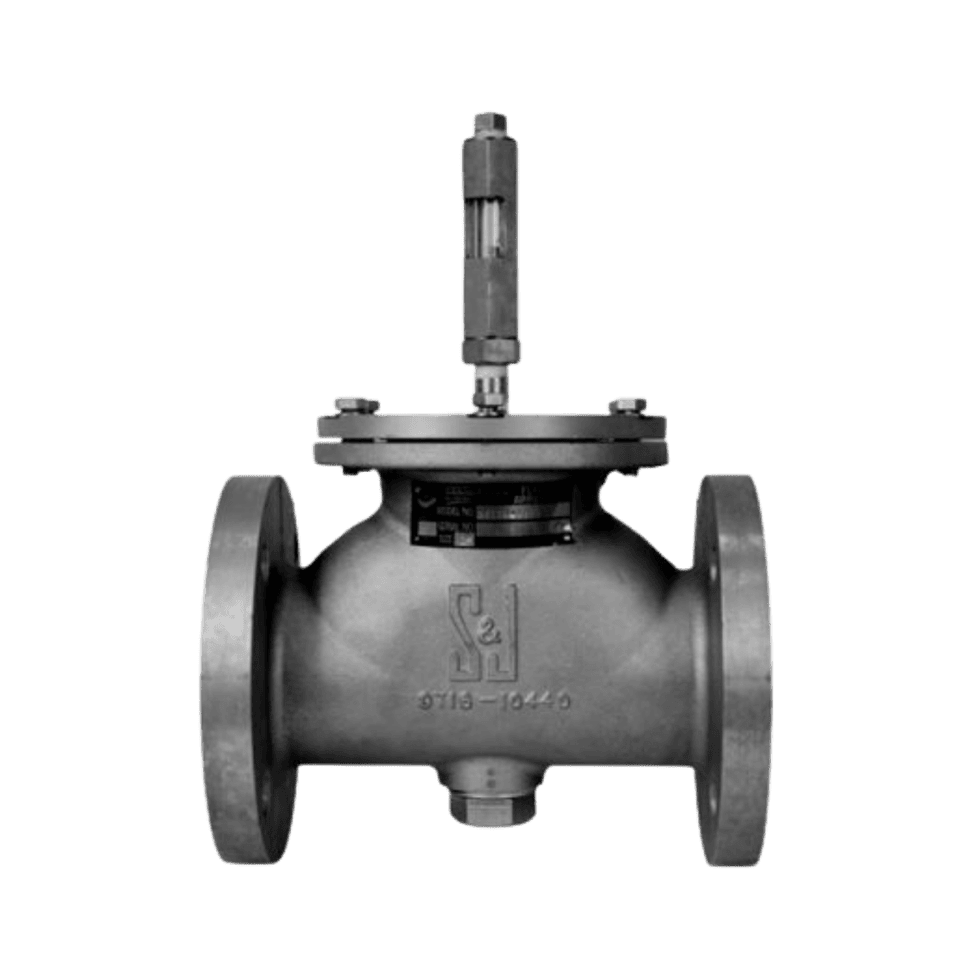
Shand & Jurs 97130 Thermal Valve

For biogas plant engineers, flare system designers, and boiler and heat-exchanger specifiers, the Shand & Jurs 97130 Thermal Valve is a fire-activated shutoff that stops gas flow in low-pressure piping when abnormal heat indicates a fire condition, providing passive fuel isolation upstream of flares, burners, and combustion equipment.

Unlike solenoid or pneumatic emergency shutoff valves that depend on power, controls, or operator action, the 97130 uses a 255°F fusible element and spring-loaded pallet to close mechanically on temperature alone, with no power, control signal, or operator present required to actuate.

The valve remains open during normal operation and closes automatically when the fusible element melts, releasing a spring-loaded pallet that positively seals the line. A visual indicator rod confirms closure, and the fusible element can be replaced without disassembling the valve or removing it from the piping.

Rated for working pressures up to 5 PSIG and installable in horizontal or vertical piping, the 97130 is typically paired with a deflagration arrester and installed upstream of burners, flares, and boiler/heat-exchanger fuel inputs on digester gas, landfill gas, and utility fuel gas service.

Shand & Jurs 97130
Shand & Jurs 97130 Thermal Valve
02

Features

255°F Fusible Element

Automatically shuts off gas flow when pipeline temperature rises from fire exposure, providing passive fuel isolation without power or controls.

Spring-Loaded Positive Shutoff

Provides mechanical closure independent of plant utilities or controls, so fuel isolation does not depend on signal integrity during an event.

Visual Indicator Rod

Confirms valve actuation without removing insulation or opening piping, supporting fast post-event verification during emergency response.

Replaceable Fusible Element

Restores service quickly after activation without removing the valve from the line, minimizing downtime during post-event reset.

Horizontal or Vertical Mount

Simplifies placement in existing piping layouts, allowing installation at the optimal fire-protection point without reconfiguring the run.

Optional Proximity Switch

Sends closure confirmation to control or alarm systems, providing remote indication when the fusible element activates during an emergency.

Applications

  • Digester Gas Lines: Provides passive fire isolation on digester gas piping upstream of flares, burners, and utilization equipment where post-fire fuel containment is essential.
  • Flare Inlet Piping: Installs at flare inlets to stop fuel supply during fire events, preventing continued gas feed into a flare experiencing flashback or flame impingement.
  • Burner Fuel Supply: Protects burner trains on boilers, ovens, and process heaters by cutting fuel automatically when line temperature indicates an upstream fire condition.
  • Landfill Gas: Provides passive shutoff on landfill gas distribution lines, supporting emergency isolation at blowers, flares, and engine generator fuel inputs.
  • Lagoon Gas: Installs on lagoon and wastewater biogas piping where a mechanical, power-free thermal shutoff is required for fire safety compliance.
  • Utility Fuel Gas: Fits utility fuel gas drops to process heaters and boilers, adding a passive safety barrier upstream of the fuel-train shutoff valves.
03

Specifications

Parameter

Specification

Operating Function

Thermal fire-activated shutoff

Activation Temperature

255°F fusible element

Pressure Rating

Up to 5 PSIG

Line Sizes

2″ – 12″

Installation

Horizontal or Vertical

Body Material

Low-copper aluminum or 316 stainless steel

Internals

Stainless steel

Sight Indicator

Pyrex glass with NBR gaskets

Options

Proximity switch, insulation jacket

Contact Support
2026 COST ESTIMATE

Contact Support

If you have questions not covered here, please contact the Cognesense support team for assistance.

Contact Us

How does the fusible element trigger closure?

The 255°F fusible element acts as a mechanical fuse holding the spring-loaded pallet open. When pipeline temperature reaches the melt point from fire exposure, the element fails, the spring drives the pallet onto the seat, and the line seals positively. No power, control signal, or operator action is required for activation.

How is the valve reset after activation?

+

The fusible element is replaceable in the valve without removing the assembly from the piping. After the fire condition is cleared and the piping cooled, a new fusible element is installed, the pallet is reset, and the valve is returned to service. Full disassembly of the valve is not required for a routine post-event reset.

Where should the 97130 be installed in the piping?

+

Install the 97130 upstream of the equipment being protected: upstream of burners, flares, boilers, and heat exchangers, and typically in conjunction with a deflagration arrester. Horizontal or vertical mounting is supported, which lets the valve be placed at the most effective fire-protection point without reconfiguring the run.

What pressure and line sizes are supported?

+

The valve is rated for working pressures up to 5 PSIG and available in line sizes from 2 inches through 12 inches. This envelope matches typical low-pressure biogas, digester gas, landfill gas, and utility fuel gas service upstream of flares and combustion equipment.

What materials are available?

+

Body materials are low-copper aluminum or 316 stainless steel, with stainless internals throughout. The sight indicator uses Pyrex glass with NBR gaskets. Stainless construction is recommended for aggressive biogas, digester gas, and landfill gas streams with elevated H₂S or moisture.

Can closure be reported to a control system?

+

Yes. An optional proximity switch is available that sends a position signal to the site control or alarm system when the valve actuates. This supports faster operator response, helps coordinate emergency procedures, and provides a time-stamped record of the shutoff event.

Does the 97130 replace a standard shutoff valve?

+

No. The 97130 is a passive fire-protection device installed in addition to normal fuel-train shutoff and control valves. It provides autonomous mechanical isolation when the thermal condition is reached, independent of the plant controls that drive the primary shutoffs. Its purpose is to remove fuel supply to a fire zone when normal controls may have already failed or been bypassed.

Summary

With over a century of tank-safety heritage, Cognesense delivers the Shand & Jurs 97130 Thermal Valve as a passive fire-activated shutoff for low-pressure biogas, digester gas, landfill gas, and utility fuel gas piping upstream of flares, burners, and combustion equipment. A 255°F fusible element and spring-loaded pallet close the line mechanically during fire exposure without power, controls, or operator action, while a replaceable element and visual indicator shorten post-event reset. Paired with deflagration arresters on flare and burner inlets, the 97130 is trusted wherever you need to measure, monitor, and protect what matters most.

Shand & Jurs
Measure.
Monitor.
Protect.