01

97125 Condensate Accumulator

Gas Condensate Accumulator Vessel

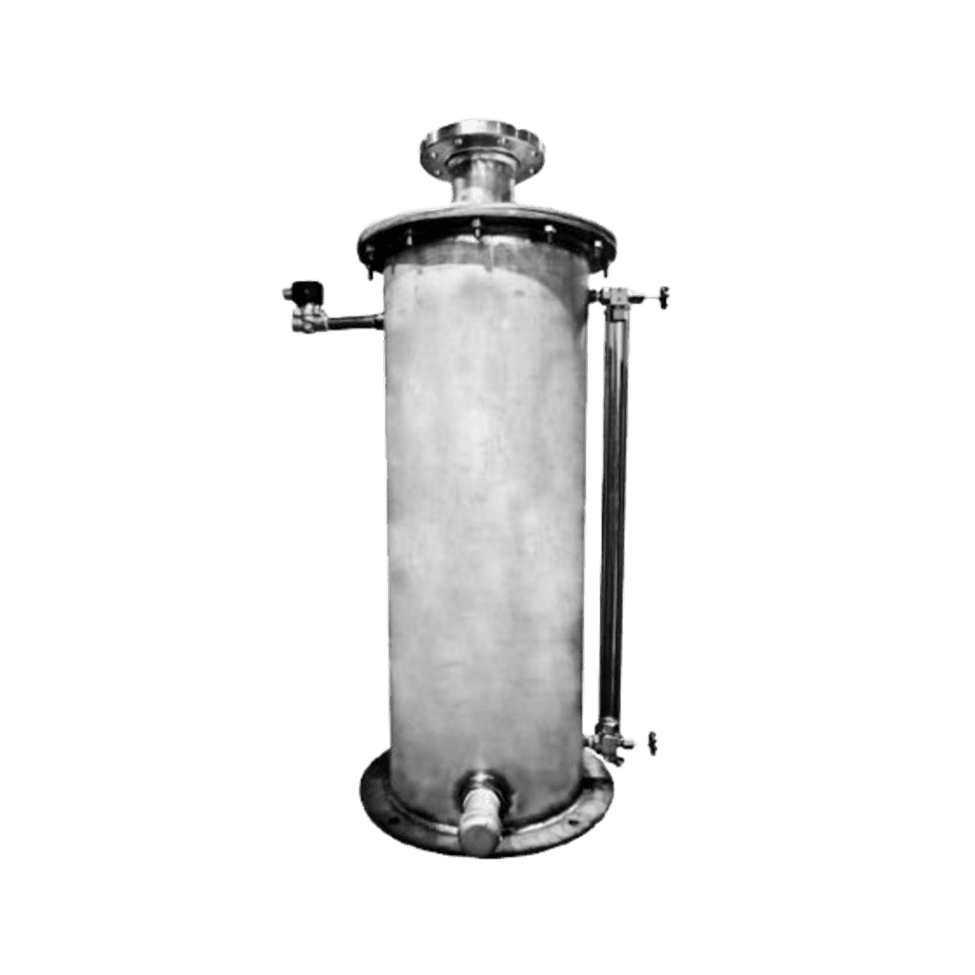
Shand & Jurs 97125 Condensate Accumulator

For digester and landfill gas operators, RNG conditioning engineers, and fuel gas distribution teams, the Shand & Jurs 97125 Condensate Accumulator stores and manages liquid condensate in low-pressure gas piping, buffering accumulation between separation and drainage devices so downstream regulators, burners, and instrumentation receive a stable gas supply.

Unlike a standalone drip trap that simply drains liquid as it appears, the 97125 adds storage volume between the separation equipment upstream and the drip traps downstream. As saturated gas cools in transport, continuous liquid formation can exceed instantaneous drain capacity; the accumulator captures that surplus and releases it through a controlled drain, preventing slug flow and unstable discharge.

Capacities of 13 or 125 gallons cover intermittent or continuous condensation rates, with working pressures of 5 or 25 PSIG, a 4-inch ANSI 125/150 flat-face flanged inlet, and NEMA 7 level switches and solenoid for automated, water-sealed discharge. Construction is offered in carbon steel, 304, 316, or 316L stainless to match service corrosivity.

Installed between the 97120 Sediment Trap upstream and the 97100 / 97110 drip traps downstream, the 97125 is the central conditioning component that lets wet-gas systems run continuously without carryover into regulators, flame arresters, or burner trains.

Shand & Jurs 97125
Shand & Jurs 97125 Condensate Accumulator
02

Features

Internal Drip Leg Discharge

Evacuates stored liquid through an internal drip leg that keeps a water seal in place, allowing drainage without depressurizing the accumulator.

13 or 125 Gallon Capacity

Two storage sizes buffer condensate surges from saturated gas cooling, matched to intermittent or continuous condensation rates across the site.

Level Switches and Solenoid

High and low level switches drive a NEMA 7 solenoid for automatic discharge control, maintaining the water seal so gas cannot escape.

Sight Glass Connections

Two 1/2-inch FNPT sight glass ports support visual level verification during operation, simplifying commissioning and routine process checks.

5 or 25 PSIG Service

Matches standard and elevated low-pressure gas conditioning service on digester gas, landfill gas, fuel gas headers, and RNG trains.

Stainless and Carbon Options

Carbon steel, 304, 316, or 316L stainless construction matches service corrosivity on wet digester gas, landfill gas, and H₂S-bearing streams.

Applications

  • Digester Gas: Buffers condensate surges from cooling digester gas, stabilizing liquid discharge into downstream drip traps and protecting conditioning equipment.
  • Landfill Gas: Manages continuous moisture formation on landfill gas headers, preventing slug flow into blowers, flares, and utilization engines.
  • Fuel Gas Headers: Installs on plant fuel gas distribution headers to deliver stable, dry gas to burner trains, boilers, and heat exchangers downstream.
  • RNG Conditioning: Supports renewable natural gas conditioning skids where predictable condensate management is required between cooling and upgrading stages.
  • Flare Systems: Protects flare ignition and flame-arrester trains by preventing slug flow of accumulated condensate during high-rate gas transport.
  • Wet Gas Piping: Fits saturated biogas and digester gas piping where continuous liquid formation would otherwise exceed instantaneous drain capacity.
03

Specifications

Parameter

Specification

Function

Condensate storage and controlled discharge

Capacity

13 or 125 gallons

Working Pressure

5 or 25 PSIG

Inlet

4″ ANSI 125/150 flat face flange (alternate connections available)

Drain

3/4″ NPT male

Blowout Connection

2″ NPT male

Sight Glass Ports

Two 1/2″ FNPT, 316SS, Brass or Bronze

Materials

Carbon Steel, 304, 316, 316L SS

Seals

NBR or CR

Hardware

Stainless Steel

Switches and Solenoid

NEMA 7

Contact Support
2026 COST ESTIMATE

Contact Support

If you have questions not covered here, please contact the Cognesense support team for assistance.

Contact Us

What is the role of the accumulator in a gas conditioning train?

The 97125 sits between upstream separation devices such as the 97120 Sediment Trap and downstream drip traps such as the 97100 or 97110. It stores condensate that forms continuously as saturated gas cools, buffering liquid surges that would otherwise exceed instantaneous drain capacity and destabilize downstream regulators, burners, and instrumentation.

How does the internal drip leg maintain a water seal?

+

Discharge is routed through an internal drip leg that keeps a column of liquid above the drain outlet during evacuation. That column acts as a continuous water seal, so gas cannot pass through the drain even when the solenoid is open. The seal is a deliberate design feature that prevents methane release during automated discharge.

How do I select between the 13-gallon and 125-gallon capacities?

+

Size the accumulator against the peak condensate generation rate on the header and the drain interval configured on the solenoid. Large, continuously wet digester gas or landfill gas headers generally call for the 125-gallon vessel; smaller or intermittently wet service is well matched to the 13-gallon vessel.

What working pressures and inlet connections are supported?

+

Standard working pressures are 5 or 25 PSIG, with a 4-inch ANSI 125/150 flat face flanged inlet as standard; alternate connections are available on request. The 3/4-inch NPT drain, 2-inch NPT blowout, and dual 1/2-inch FNPT sight glass ports round out the standard piping interface.

What materials are available for corrosive service?

+

The accumulator is offered in carbon steel, 304, 316, or 316L stainless construction, with NBR or CR seals and stainless hardware. Sight glass ports are 316 stainless, brass, or bronze. Select stainless for aggressive digester gas, landfill gas, or H₂S-bearing streams where long-term corrosion resistance is required.

Are the level switches and solenoid hazardous-area rated?

+

Yes. High and low level switches and the discharge solenoid are supplied in NEMA 7 enclosures suitable for hazardous-area service. This supports installation in classified digester and landfill gas areas without additional environmental protection, subject to local electrical code review.

Which drip traps does the 97125 typically pair with?

+

The 97125 is commonly paired with the 97100 Manual Drip Trap for attended sites, the 97100E Electric Drip Trap for SCADA-integrated sites, or the 97110 Automatic Drip Trap for unattended service where float operation is permitted. The accumulator handles storage; the trap performs the final gas-safe drainage.

Summary

With over a century of tank-safety heritage, Cognesense delivers the Shand & Jurs 97125 Condensate Accumulator as the central conditioning component for digester gas, landfill gas, and RNG piping where saturated gas cools and liquid forms faster than drip traps can evacuate it. Its 13- or 125-gallon buffer, water-sealed internal drip leg, NEMA 7 level switches, and carbon or stainless construction stabilize discharge and protect regulators, flame arresters, and burner trains downstream. Between separation upstream and drainage downstream, the 97125 is trusted wherever you need to measure, monitor, and protect what matters most.

Shand & Jurs
Measure.
Monitor.
Protect.